Mid-Atlantic Masters Newsletter Archive
Here is a link to our newsletter archive.
Here is a link to our newsletter archive.
At every Mid-Atlantic Masters race, you will have between 30-45 minutes (depending on the race schedule) to inspect the course before your race. Course inspection is a critical opportunity to slowly preview the course and plan your approach to the race. Before the season begins, we wanted to provide a helpful refresher about key inspection do’s and dont’s so that you can make the most of your inspections this season!
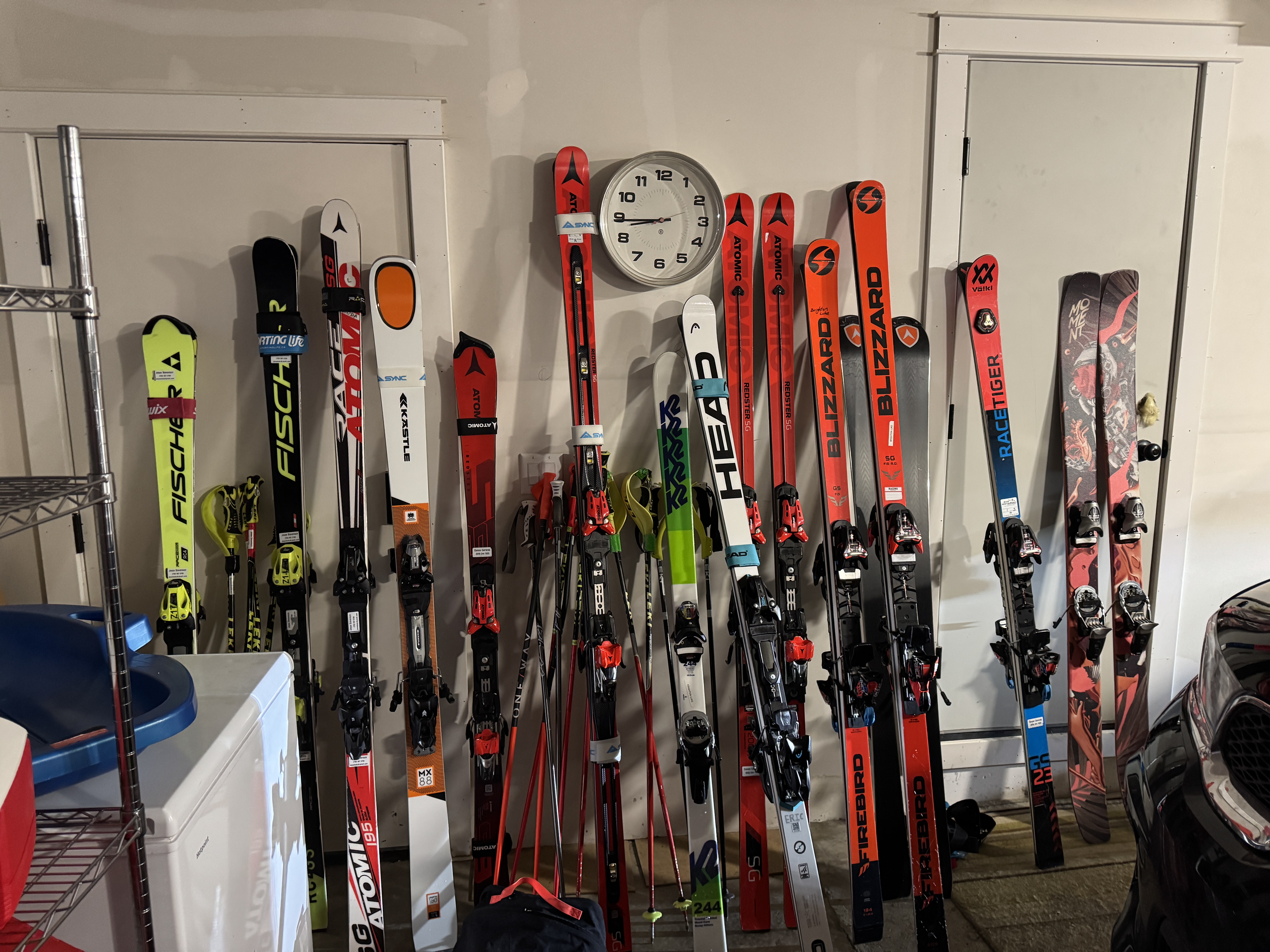
Masters ski racing, unlike junior ski racing, has no fixed ski length or radius requirements! This makes it easy to jump into Masters racing without needing to make a large upfront investment in specialized skis. Most all-mountain recreational skis have radiuses and lengths that work well enough in Masters slalom and giant slalom courses--although we wouldn't recommend using an all-mountain recreational ski for super-g (and the jury could choose to stop an athlete from running SG if they were planning to use a short pair of skis). That said, if you want to use race-specific skis, you can often have more fun and go faster in the race course.
When you're looking for race skis, the first thing to consider are the disciplines that you will be racing in: slalom, giant slalom, and super-g. Each discipline has different recommended ski lengths and ski radiuses, based on the distance between the gates, the speed that you will be traveling, and the size of your turns. In general, slalom skis are the shortest with the smallest radius, and super-g skis are the longest with the largest radius. For Masters racing, when you're first starting out, you will probably want two pairs of skis: one ski for slalom and one ski for giant slalom and super-g.
If you are new to the sport, the key differences come down to turn shape and speed. Slalom features the tightest, quickest turns with gates set close together; giant slalom opens up the radius for longer, sweeping arcs at moderate speed; and super-g pushes the pace further with wide turns and minimal gate rehearsal. Your ski choice should match the turn radius and speed demands of each discipline.
| Discipline | Gender | Recommended Length | Recommended Radius |
|---|---|---|---|
| Slalom | Women | 150cm - 157cm | 11m - 13m |
| Slalom | Men | 157cm - 165cm | 11m - 13m |
| Giant Slalom | Women | 170cm - 182cm | 17m - 30m |
| Giant Slalom | Men | 175cm - 188cm | 17m - 30m |
| Super-G | Women | 180cm - 200cm | 27m - 40m |
| Super-G | Men | 185cm - 205cm | 27m - 40m |
Generally speaking slalom skis range from 155cm - 165cm long, with a 11m-13m radius. You may find some slightly shorter that work just fine as well. Whether you are in the 155 size range or 165 range depends on weight, preference and experience. We have some top male racers that are skiing on 157 slaloms. There are “rack” slalom skis that ski fine as well as those labled as “FIS Approved” slalom skis. Generally speaking the FIS approved slalom skis might be slightly beefier than a rack slalom ski.
When shopping for a giant slalom ski, start by looking at skis labeled "Masters" or "Non-FIS". Skis that are race-inspired (often colloquially known as "beer league skis" or "cheater skis") also work great for Masters racing. The naming conventions for these skis can vary based on the manufacturer and the store where you're shopping, but in general, giant slalom skis in these categories have a radius between 17m and 26m, and a length between 170cm and 185cm.
Within that fairly broad range of radiuses and lengths, consider your size, strength, and level of race experience to narrow down your choices. Skis that are longer with larger radiuses are going to require more strength and better technique (and often more speed) to flex and carve. In other words, they're going to be harder for beginner racers to use. If you are a smaller skier, a skier with more limited race experience, or a skier with less leg strength, you should tend towards the smaller radius and shorter length end of the giant slalom ski spectrum.
For intermediate skiers racing on the East Coast, a shorter, more forgiving GS ski in the 17m-21m radius range can be especially rewarding. Firmer snow and variable conditions at mountains across New York, New Jersey, Pennsylvania favor a ski that initiates turns quickly and holds an edge on ice without demanding perfect technique at high speed.
We often advise against newer racers purchasing "race stock" or "FIS Approved" giant slalom and super-g skis for Masters races. These race stock skis are often labeled as "FIS" and conform to the regulations for NorAm, Europa Cup, and World Cup level competitions. In general, FIS skis are longer with larger radiuses (and are much stiffer) than what is best suited for Mid-Atlantic Masters courses. If you can't tell whether the ski you're considering is a FIS-approved race stock ski, check the length and radius of the ski in the description. For men, FIS giant slalom skis are 193cm long with a 30m radius, and FIS super-g skis are >=210cm long with a 45m radius; for women, FIS giant slalom skis are 188cm long with a 30m radius, and FIS super-g skis are >=205cm long with a 40m radius. Some of our most experienced racers do use FIS race stock skis for our races, but in general, most Masters skiers should avoid these skis to have the most fun in a course.
If you're not totally sure which ski to purchase, reach out on the Mid-Atlantic Masters WhatsApp group for advice. We're a fairly friendly, helpful group of racers, and there are decades worth of racing expertise in the WhatsApp group!
For reference, the current U.S. Ski and Snowboard Masters equipment rules do not mandate specific ski lengths or turn radiuses for Masters competitors, which is why this flexibility exists. You can review the official rules on the USSS Masters Equipment Rules page.
Choosing the right ski is only part of the equation. Keeping your edges sharp and your bases flat makes a noticeable difference on race day, especially on the firm East Coast snow common at Mid-Atlantic venues. Many ski shops near our race mountains offer race-level tuning services, and several of our sponsors offer discounts on tuning supplies for Mid-Atlantic Masters members. We've put together an introductory guide to ski-tuning for Masters racers that you can review if you're looking for specific tips.
Now that you've figured out which skis to use, are you ready to join us on the race course?
It's super easy to get started with Mid-Atlantic Masters, no matter your level of race experience. You can learn about the steps to join us at a race here.
If you're interested in getting some training under your belt before jumping in a course, we've put together a list of great training opportunities, ranging from week long camps to drop in sessions to full seasonal race programs.
Check out our race schedule to find upcoming events, or learn more about our equipment and competition rules before your first race.
We can't wait to see you at the mountain!
Last updated: 9/04/2026, with input from USSS Alpine Level 200 and Level 300 certified race coaches.
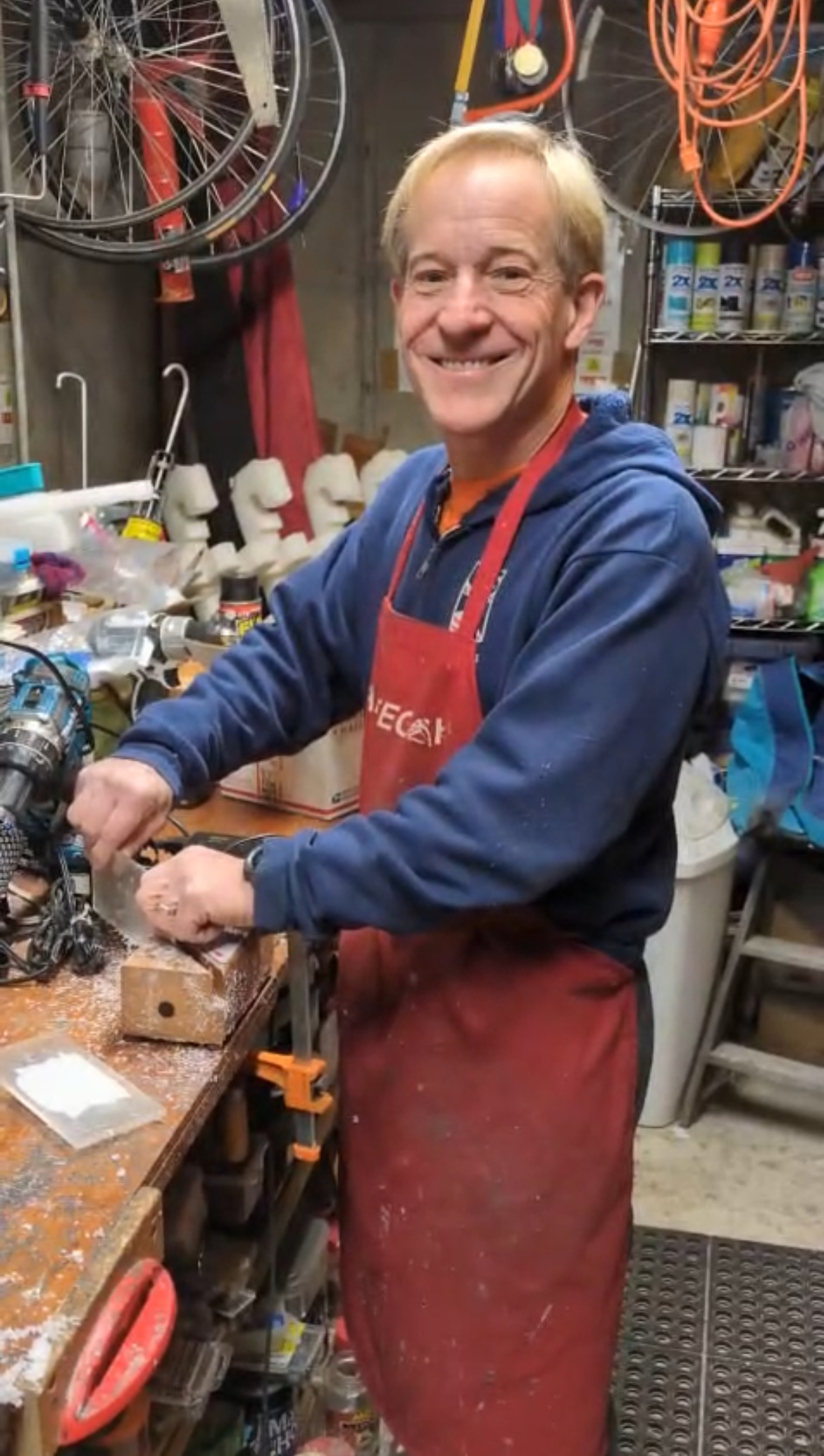
Keeping your skis regularly tuned helps your skis perform the best in the race course. When your bases are flat, your edges are sharp, and your skis are waxed, your skis will bite into the snow and glide better--both critical elements for a fast time. Especially on the East Coast, with our freeze-thaw cycles and abrasive manmade snow, your skis are going to wear down more quickly than they would if you were skiing out West.
In general, before each race day, you should check the sharpness of your skis edges and reapply wax to your bases. You will probably need to sharpen your edges once every few races. Continue reading for tips on how to sharpen your edges and wax your skis, and some recommended tuning supplies to purchase when you're first getting started.
1. Take the stone and deburr any nicks. This is hardened steel and if you don’t remove them, they will dull your files. To deburr, very lightly run the stone on the nicked area…follow the bevel of the ski. Don’t press super hard…just enough to get the burr off. Do this on the bottom and edge of ski.
2. Tape the base of the ski to keep filings out.
3. If the sidewalls are high you can shave down the sidewall to allow the file to make contact with the edge. This only has to be done periodically. Use the edge planar for this.
4. If the edges aren’t bad you can just use the diamond stone and clean up the edges at this point.
5. Run the edging tool down the length of the ski. Files are directional, so you’ll need to identify the cutting direction for the file. ….you’ll go tip to tail on one direction and tail to tip in the other unless you switch the file in the tool. It’s ok to go tip to tail then tail to tip on the other edge. The reason you do this is to ensure that the filings fall out of the tool on the side of the ski not the base to get ground into your file and base…you don’t have to clean your file if you sharpen this way. You can tell when they are sharp by brushing your finger nail over the edge or just feeling for a smooth edge. Sometimes big gouges won’t come out totally, and it’s better to leave a small imperfection then to take down too much edge.
6. Today’s bases are very hard, so if the base is too mangled you will need to take it into a ski shop to have them flatten the bases. Depending on how much you ski, it’s a good idea to get the bases flattened in a shop maybe yearly or every other year...if you are careful with your skis you can get 30-50 days without a base flatten and sometimes even more…but this depends on how many rocks you hit. Use only a good shop for this, there’s a lot of folks that can’t do this proficiently. We use Edgewise in Stowe VT to do this. They will ship skis back to you via mail.
7. Check on the specs for your skis on edge bevel. Our GS is 0.7 base, 3 edge. And our SL is 0.5 base, 3 edge. Recreational skis are 1.0 base, 2 or 3 edge. Press lightly with the edging tool, enough so you can feel it bite, but not so much that you are over pressuring…too much and you will change the bevel on the ski.
8. Once you have the basic sharpening done, polish the edges by first using a diamond stone (this is not directional) then the Arkansas stone. Use these stones in the edge of beast tool. We keep multiple edge of beast tools so we don’t always have to put them in and out of the tool.
9. Once both sides are sharp….wipe the base down…ideally you open the structure with a steel brush which will allow the ski to take on more wax…the brushes tend to have a direction marked on them…and you go tip to tail with the steel brush…just enough to get old wax out. The Swix brush has an arrow for the direction on it. The bristles should go in the direction of the ski…
10. Wipe the ski down with a clean paper towel.
1. Heat the iron up…not too hot…if the wax smokes when you put it on the iron it is too hot. You want to be sure that there is always wax in between the iron and ski. If you heat the ski up too hot and there isn’t wax in between, you can seal the base off where it won’t take wax…always have the temp just low enough to melt the wax.
2. It is best to use a universal wax that works for most temperatures. Holmenkol beta mix works for a wide range of temps, and Holmenkol yellow works for warmer temps. These two should cover most of what you need, however if you are going to only buy one, the colder range is the best bet.
3. Lay a thin layer on the ski…again…be sure the iron is not too hot otherwise you can burn the base…just hot enough to melt the wax – no smoke. Be sure to release the vise clamp so the ski is not clamped into a given position while you are heating it.
4. Let the ski cool for about 1 hr…
5. Take a plastic scraper and scrape the edges and base to remove excess wax. You can press really hard with this since it won’t damage the base.
6. After you have gotten a lot of the wax off by scraping, use a horsehair brush (for colder temps) or a nylon brush (for warmer temps) to get all the last bits of wax out of the ski.
| Item | Recommended Options |
|---|---|
| Ski vise | Swix Jaw Economy Ski Vise 20-90 |
| Side edge file guide | Side of BEAST Ski Edge Tool, 3 degree |
| File | Swix Chromed 2nd Cut File (20cm 16TPCM) |
| Waxing iron | Swix T77 Waxing Iron |
| Plastic scraper | Swix Plexi Scraper |
| Sidewall planer | Sidewall Planar FS-SKS |
| Arkansas stone | Wintersteiger Arkansas Stone |
| Diamond stones | Diamond stone — 200 grit (coarse) |
| General purpose wax | Holmenkol Wax Beta Red 200gm |
| Brake retainers | Brake retainer rubber bands, 6 pack |
| Item | Recommended Options |
|---|---|
| File cleaning brush | File card and brush |
| Base tape | Toko masking tape |
| Soft snow / warm weather wax | Holmenkol Wax Alpha Yellow 150gm |
| Horsehair wax brush | Toko horsehair brush oval |
| Steel wax brush | Toko steel brush oval |
| Tuning workbench | Swix T75W 12x47 |

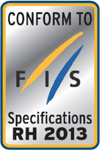 Helmets which meet the FIS standard have a sticker affixed by the manufacturer that states “Conforms to FIS Specification RH 2013”.
As requested, Green Ice Wax has developed a new overlay for the 2021-22 season. 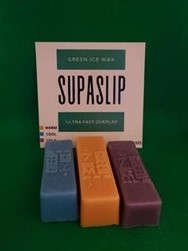
Supaslip is a high performance overlay ski wax based on GI 2000. It has 4 additional non-fluoro
additives which utilizes ceramic technology and is designed to add slip, lubricity, and abrasive resistance.
Supaslip can be used as a final "iron on" coat or a "rub on" overlay. It comes in 3 snow temperature
ranges.
warm >28 degrees F (orange)
cool 18-28 degrees F (blue)
cold <18 degrees F (purple)
Remember to use your Mid-Atlantic Masters Green Ice Wax discount code mam50 for 50% off and free shipping on orders over $50.