Overview: What Makes Masters Race Skis Different?
Masters ski racing, unlike junior ski racing, has no fixed ski length or radius requirements! This makes it easy to jump into Masters racing without needing to make a large upfront investment in specialized skis. Most all-mountain recreational skis have radiuses and lengths that work well enough in Masters slalom and giant slalom courses--although we wouldn't recommend using an all-mountain recreational ski for super-g (and the jury could choose to stop an athlete from running SG if they were planning to use a short pair of skis). That said, if you want to use race-specific skis, you can often have more fun and go faster in the race course.
When you're looking for race skis, the first thing to consider are the disciplines that you will be racing in: slalom, giant slalom, and super-g. Each discipline has different recommended ski lengths and ski radiuses, based on the distance between the gates, the speed that you will be traveling, and the size of your turns. In general, slalom skis are the shortest with the smallest radius, and super-g skis are the longest with the largest radius. For Masters racing, when you're first starting out, you will probably want two pairs of skis: one ski for slalom and one ski for giant slalom and super-g.
If you are new to the sport, the key differences come down to turn shape and speed. Slalom features the tightest, quickest turns with gates set close together; giant slalom opens up the radius for longer, sweeping arcs at moderate speed; and super-g pushes the pace further with wide turns and minimal gate rehearsal. Your ski choice should match the turn radius and speed demands of each discipline.
Quick Answers: Masters Race Ski Specs by Discipline
| Discipline | Gender | Recommended Length | Recommended Radius |
|---|---|---|---|
| Slalom | Women | 150cm - 157cm | 11m - 13m |
| Slalom | Men | 157cm - 165cm | 11m - 13m |
| Giant Slalom | Women | 170cm - 182cm | 17m - 30m |
| Giant Slalom | Men | 175cm - 188cm | 17m - 30m |
| Super-G | Women | 180cm - 200cm | 27m - 40m |
| Super-G | Men | 185cm - 205cm | 27m - 40m |
Best Slalom Skis for Masters Racing
Generally speaking slalom skis range from 155cm - 165cm long, with a 11m-13m radius. You may find some slightly shorter that work just fine as well. Whether you are in the 155 size range or 165 range depends on weight, preference and experience. We have some top male racers that are skiing on 157 slaloms. There are “rack” slalom skis that ski fine as well as those labled as “FIS Approved” slalom skis. Generally speaking the FIS approved slalom skis might be slightly beefier than a rack slalom ski.
Best Giant Slalom and Super-G Skis for Masters Racing
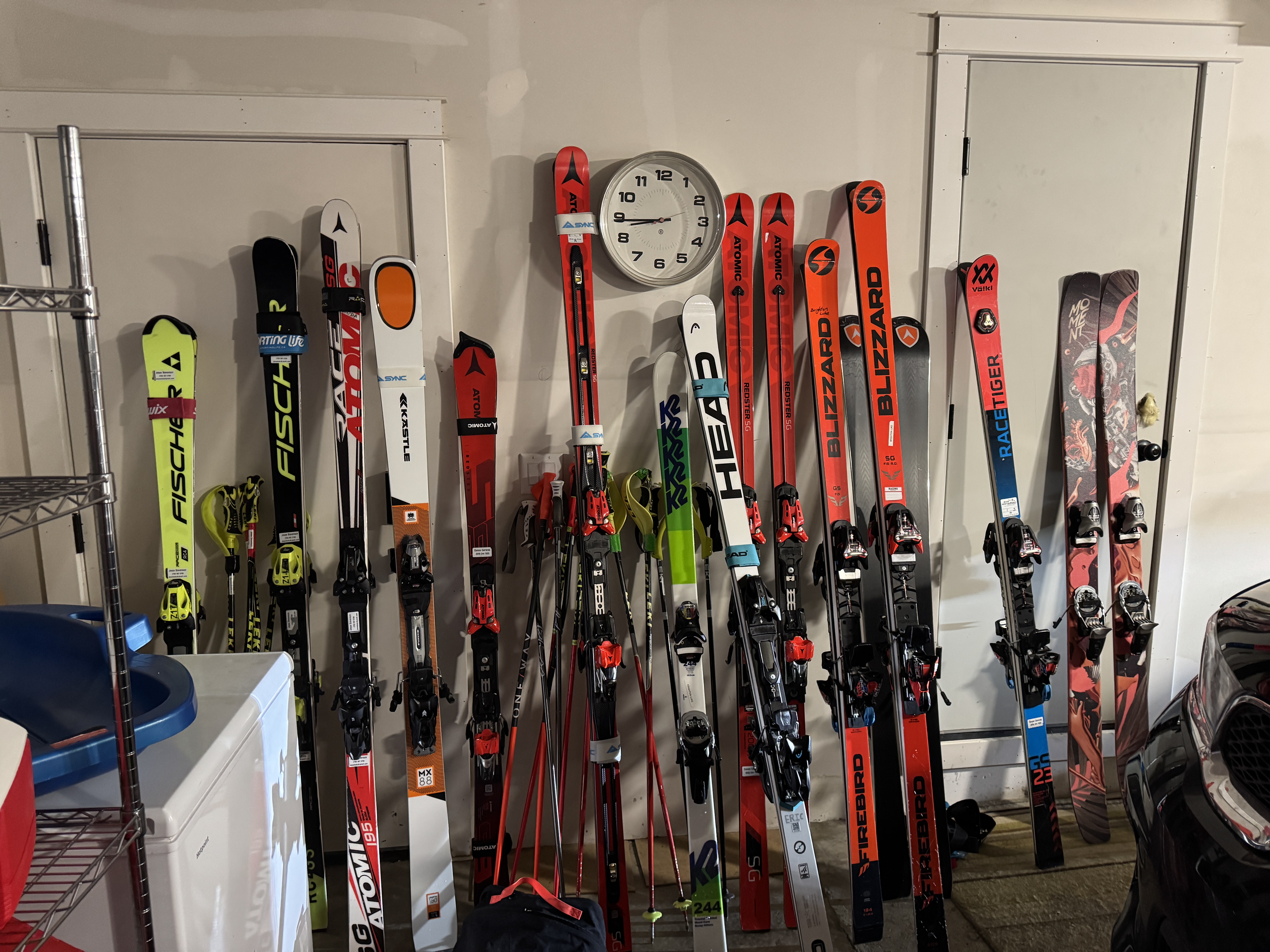
When shopping for a giant slalom ski, start by looking at skis labeled "Masters" or "Non-FIS". Skis that are race-inspired (often colloquially known as "beer league skis" or "cheater skis") also work great for Masters racing. The naming conventions for these skis can vary based on the manufacturer and the store where you're shopping, but in general, giant slalom skis in these categories have a radius between 17m and 26m, and a length between 170cm and 185cm.
Within that fairly broad range of radiuses and lengths, consider your size, strength, and level of race experience to narrow down your choices. Skis that are longer with larger radiuses are going to require more strength and better technique (and often more speed) to flex and carve. In other words, they're going to be harder for beginner racers to use. If you are a smaller skier, a skier with more limited race experience, or a skier with less leg strength, you should tend towards the smaller radius and shorter length end of the giant slalom ski spectrum.
For intermediate skiers racing on the East Coast, a shorter, more forgiving GS ski in the 17m-21m radius range can be especially rewarding. Firmer snow and variable conditions at mountains across New York, New Jersey, Pennsylvania favor a ski that initiates turns quickly and holds an edge on ice without demanding perfect technique at high speed.
We often advise against newer racers purchasing "race stock" or "FIS Approved" giant slalom and super-g skis for Masters races. These race stock skis are often labeled as "FIS" and conform to the regulations for NorAm, Europa Cup, and World Cup level competitions. In general, FIS skis are longer with larger radiuses (and are much stiffer) than what is best suited for Mid-Atlantic Masters courses. If you can't tell whether the ski you're considering is a FIS-approved race stock ski, check the length and radius of the ski in the description. For men, FIS giant slalom skis are 193cm long with a 30m radius, and FIS super-g skis are >=210cm long with a 45m radius; for women, FIS giant slalom skis are 188cm long with a 30m radius, and FIS super-g skis are >=205cm long with a 40m radius. Some of our most experienced racers do use FIS race stock skis for our races, but in general, most Masters skiers should avoid these skis to have the most fun in a course.
If you're not totally sure which ski to purchase, reach out on the Mid-Atlantic Masters WhatsApp group for advice. We're a fairly friendly, helpful group of racers, and there are decades worth of racing expertise in the WhatsApp group!
For reference, the current U.S. Ski and Snowboard Masters equipment rules do not mandate specific ski lengths or turn radiuses for Masters competitors, which is why this flexibility exists. You can review the official rules on the USSS Masters Equipment Rules page.
A Quick Note on Race Ski Tuning
Choosing the right ski is only part of the equation. Keeping your edges sharp and your bases flat makes a noticeable difference on race day, especially on the firm East Coast snow common at Mid-Atlantic venues. Many ski shops near our race mountains offer race-level tuning services, and several of our sponsors offer discounts on tuning supplies for Mid-Atlantic Masters members. We've put together an introductory guide to ski-tuning for Masters racers that you can review if you're looking for specific tips.
Key Takeaways
- Masters ski racing has no fixed ski length or radius requirements, so most recreational all-mountain skis work for slalom and giant slalom. Super-G requires a longer, purpose-built ski.
- For slalom, look for skis between 150cm and 165cm with an 11m to 13m turn radius. For giant slalom, 170cm to 188cm with a 17m to 30m radius. For Super-G, 180cm to 205cm with a 27m to 40m radius.
- Skis labeled "Masters," "Non-FIS," or "beer league" are designed for adult recreational racers and are typically the best fit for Mid-Atlantic Masters courses. Avoid FIS race stock skis unless you are an experienced, high-level competitor.
- Your ideal ski depends on your weight, leg strength, and experience level. Newer or smaller racers should start with shorter lengths and smaller radiuses within each discipline's range.
Ready to Race?
Now that you've figured out which skis to use, are you ready to join us on the race course?
It's super easy to get started with Mid-Atlantic Masters, no matter your level of race experience. You can learn about the steps to join us at a race here.
If you're interested in getting some training under your belt before jumping in a course, we've put together a list of great training opportunities, ranging from week long camps to drop in sessions to full seasonal race programs.
Check out our race schedule to find upcoming events, or learn more about our equipment and competition rules before your first race.
We can't wait to see you at the mountain!
Last updated: 9/04/2026, with input from USSS Alpine Level 200 and Level 300 certified race coaches.