What equipment is required for Masters ski racing?
Helmets
 Masters ski racing has one hard requirement for equipment: helmets. You must wear a helmet for every Masters race; if you do not have a helmet, you will not be permitted to start.
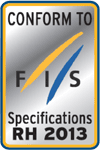
For giant slalom and super-g, racers must wear hard-eared helmets that meet FIS standards (marked "Conforms to FIS Specification RH 2013"; you can see an image of this sticker on the right). FIS-approved helmets have the "FIS" sticker on the back. When you are shopping for a helmet at a ski shop, ask for a FIS hard-eared helmet to get directed to the correct products. We also have some hard-eared helmets that we can loan to racers on race days, if needed; just remember to email us in advance at [email protected] so we know to bring a helmet in your size.
For slalom, helmets do not need to be hard-eared, FIS-compliant helmets. However, you do need to wear a helmet!
What equipment is optional for Masters ski racing?
Race Skis
For Masters races, you are welcome to use your recreational all-mountain skis, although you will often have more fun in the course with race-specific equipment. We've written a full guide about choosing race skis that you should review before making your ski decision!
Race Suits
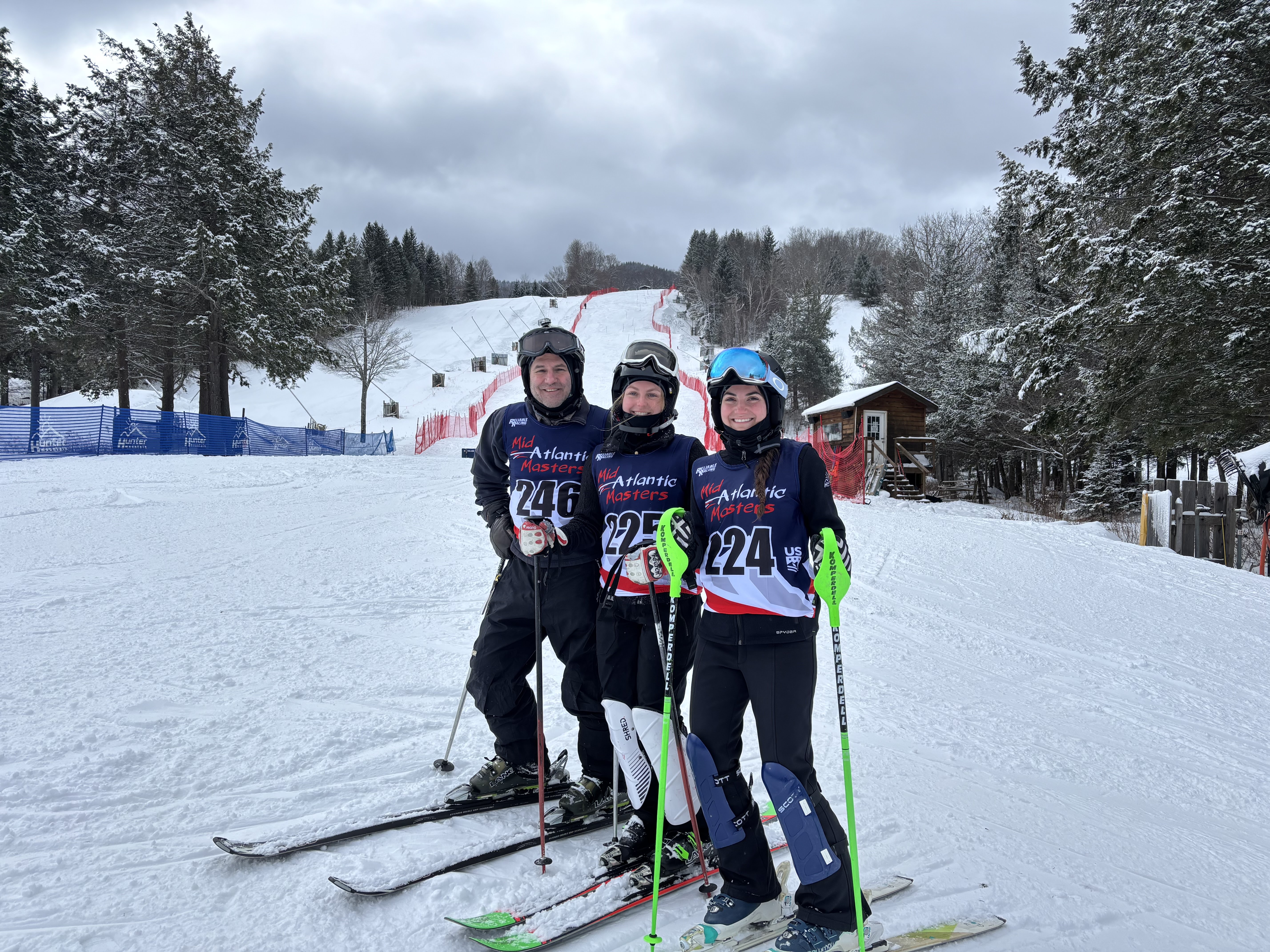
Race suits look cool and are fun to wear, but they're definitely not required for Masters races. You can participate in Masters races in your usual ski pants and ski jacket with no issues. Just make sure that your bib fits over your ski jacket and that your number is visible.
Race Ski Poles
When you're first starting to race, you can use your recreational ski poles for giant slalom and super-g. But if you want to purchase race poles for these events, feel free to, even though GS and SG race poles are not required! Giant slalom and super-g poles tend to be aerodynamically-shaped and constructed from lightweight materials like carbon fiber.
We would encourage you to use a separate pair of poles, ideally with pole guards, for slalom. Slalom poles tend to be beefier than GS and SG poles, mainly because you often make contact with the slalom gates using the poles. Be aware that you aren't allowed to use poles with slalom guards for GS or SG, since you're going too fast, and hooking a gate with the slalom guard in these events can lead to injury.
Protective Equipment
Although protective equipment is optional for Masters races (other than helmets, which are required!), at a minimum we recommend investing in protective gear for slalom. The products listed below for giant slalom and super-g are optional but can provide you with an additional level of comfort and safety as you progress in the sport.
Slalom Protective Equipment
When you watch skiers race slalom in the World Cup or Olympics, you probably noticed that the athletes block the gates out of the way with their poles and shins. This is the result of taking the fastest line through the course. In Masters races, you will also see skiers blocking gates. It hurts to get hit with a gate, so investing in protective equipment can help keep you from accumulating a painful collection of bruises throughout the season!
The following pieces of protective gear are important for slalom:
- Chin guard. This attaches to your helmet and prevents gates from hitting you in the face or damaging your teeth.
- Slalom pole guards. These attach to the grips of your poles and protect your hands from contact with gates.
- Shin guards. These cover your shins and protect your lower legs from contact with gates.
As a new racer, definitely purchase a chin guard and shin guards. Realistically, in your first season of racing, you will not be skiing close enough to the slalom gates to require pole guards, so you can skip this purchase initially if you are looking to save some money.
Giant Slalom and Super-G Protective Equipment
For giant slalom and super-g, you don't necessarily need to purchase protective gear, but the following products are used by some Masters racers:
- Back protector. Ski racers often wear back protectors to protect their spines by absorbing and distributing the force from high-speed falls. In Masters races, about half of our field uses back protectors for Giant Slalom and Super-G.
- Arm guards. These guards cover your forearms and protect you from bruises caused by contact with gates. Most Masters racers do not ski close enough to GS and SG gates to require arm guards; less than half of our field uses arm guards.
- Reinforced racing gloves. Racing gloves have plastic or carbon fiber reinforcements around the knuckles and thumbs to protect your hands from contact with gates. Similar to arm guards, reinforced racing gloves are not necessary unless you regularly make contact with GS or SG gates with the backs of your hands. Most Masters racers do use reinforced racing gloves, but they are not required.
- Cut-proof pants. Over the past few years, there have been multiple laceration injuries at the highest levels of ski racing (Aleks Kilde is one of the most recent examples). Cut-proof pants prevent your ski edges from slicing into your legs if you have a serious fall. FIS now requires racers to wear 3-star certified cut-proof pants at NorAm, Europa Cup, World Cup, and FIS Masters events, although they are not yet a requirement for U.S. Ski & Snowboard Masters racing. If you do want to protect yourself from laceration injuries, Mid-Atlantic Masters is sponsored by Diston, a manufacturer of anti-cut garments, and you can use our code MAMA25 for a 25% discount on your purchase and a free ski strap.
Race Boots
As any skier knows, properly-fitted ski boots are the single most important piece of gear. But as a new racer, do you need to purchase a pair of race boots? If you already have boots that fit you well and that you ski in confidently, you do not need to buy a pair of race-specific boots. Over time, as you progress in ski racing, you might consider moving to boots with higher flex ratings, but as with any boot purchase, you should consult with your trusted boot fitter first. Proper alignment in your race boots is also critical, and another area that an experienced boot fitter can help you with. If you need boot fitter recommendations, ask around in the Mid-Atlantic WhatsApp group!
Where can I buy equipment for Masters ski racing?
Used Gear
Many adult ski racers started their Masters racing careers on used skis. Choosing older model skis can be a great cost-effective way to get into the sport, or to experiment with different ski lengths and radiuses without a huge financial investment. If you're looking for used race skis or other race equipment, you have a few options:
- Mid-Atlantic Masters WhatsApp group. If there's one thing Masters racers love, it's ski gear...which means that many of our racers have large collections of old, lightly-used skis and race gear in their basements. Before looking around on the internet for used gear, reach out in the Mid-Atlantic Masters WhatsApp group first. Chances are good that someone has what you're looking for and would be open to making a deal.
- Sideline Swap. This is an online marketplace for new and used sports equipment. You can generally find good deals on ski racing equipment, and even stumble upon gear from U.S. Ski Team athletes!
- Local ski swaps. At the beginning of each season, many local ski shops, race programs, and mountains hold public ski swap events. These events can be hit-or-miss, but you can often find gems and support your local skiing community at the same time.
New Gear
Mid-Atlantic Masters partners with some excellent race-focused ski shops in our region. If you're looking to purchase new ski racing gear, check out the inventory at our partner ski shops first. The following stores are current Mid-Atlantic sponsors, either for individual events or across the full season:
- Peak Performance Ski Shop (Killington, VT)
- Sports Page Ski & Patio (Queensbury, NY)
- The Pro Ski & Ride (Hunter, NY)
All three sponsor stores offer racer prices on equipment.
If you can't find what you're looking for at Mid-Atlantic's partner ski shops, The Race Place and A Racer's Edge (USSS Masters sponsor) both have great online selections.
How to start racing Masters
Now that you understand the equipment requirements, are you ready to jump into the start gate and try some Masters races? Mid-Atlantic Masters is a U.S. Ski & Snowboard affiliated organization who conducts Masters races in New York, New Jersey, and Pennsylvania. We are are part of the Eastern Region, which also includes New England Masters (NEMS), NY Masters (primarily Western NY) and Southern (SARA). We welcome racers of all skill levels and racing experiences, as long as you're looking to ski fast and have a blast.
Getting started with us is easy, and takes just three steps. You can find out more about how to start racing with us at this link. We can't wait to see you on the slopes this season!
If you're from elsewhere in the U.S., there are Masters race leagues all across the country. You can find the Masters race league closest to you at the U.S. Ski & Snowboard Masters page here.